Sedona AZ - Cliff Dwellings & Rock Slide
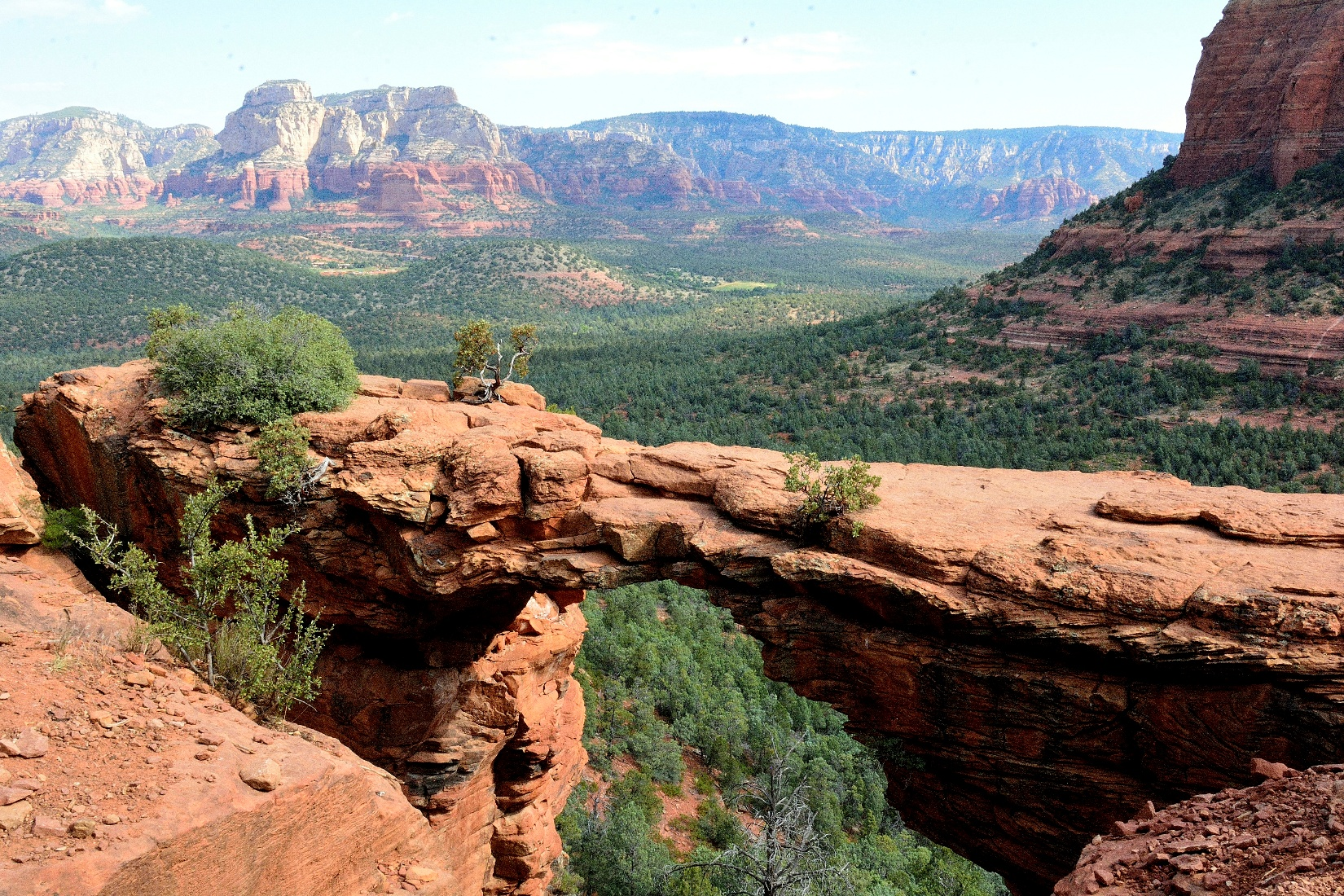
Devil’s Bridge Trail, Sedona AZ
Sedona is known as red rock country. Explore Indian cliff dwellings at Montezuma's Castle. Hike the trails to rock giants like Bell Rock, Courthouse Butte & Cathedral Rock. See Chapel of the Holy Cross & Palatki's Heritage cliff dwellings. Slide down the rock slide at Slide Rock Park and explore Sedona's canyons, swim holes, and hiking trails.
Table of Contents
Approximate Time: 8-14 days total for Sedona and Flagstaff/Page, AZ
Montezuma Castle Monument
Bell Rock & Courthouse Butte Trail
Chapel of the Holy Cross
Cathedral Rock Trail
Palatki Heritage Site
Slide Rock State Park
More Fun Things to Do
Travel Tips - Sedona
Great add-on trip: Flagstaff & Page, AZ
Sedona AZ
Parking Fees: $5 per day for any Sedona trails.
Buy passes: at trailheads, Visitor's Center, Ranger Stations, or local hotels/businesses.
Highway 179: The Redrock Scenic Byway, and includes Red Rock State Park.
Sedona AZ is known as red rock country. It's covered in stunning iron-oxide (red) sandstone rocks with layers of dazzling quartz crystals. The rocks come in various formations from pillars to massive, towering shapes. It’s truly a unique beauty to behold.
There's also multiple locations of energy centers called a vortex. They say the electromagnetic energy has healing properties. These vortexes have turned Sedona into a spiritual destination, drawing people worldwide. Native American tribes also call Sedona a sacred place, the land of their spiritual beginnings.
Montezuma Castle
Location = Montezuma Castle. 2800 Montezuma Castle Rd, Camp Verde, AZ, south of Sedona. Open 9 am - 4:45 pm daily, except for Thanksgiving day, Christmas day, and January 1st. Small entry fee.
The first permanent Sinagua dwellings were called pit houses possibly built as early as 650 A.D. They were dug partially underground and then covered. Sinagua is a Spanish word meaning sin agua = without water. "Without water" doesn't actually apply here, with Beaver Creek in their backyard & Montezuma's Well up the road. The mountain peaks north of Flagstaff were called Sierra Sin Agua by Spanish explorers, so the name Sinagua was given to the tribe after being discovered in the area in 1939.
After pit houses, the Sinauga homes became more sophisticated - called pueblos or cliff dwellings and built in natural caves which often had ladders to access the upper levels. The first cliff dwellings at Montezuma Castle Monument were built by the Sinagua around 1,050 AD. Montezuma Castle is a 20 room structure with multiple levels that housed several families.
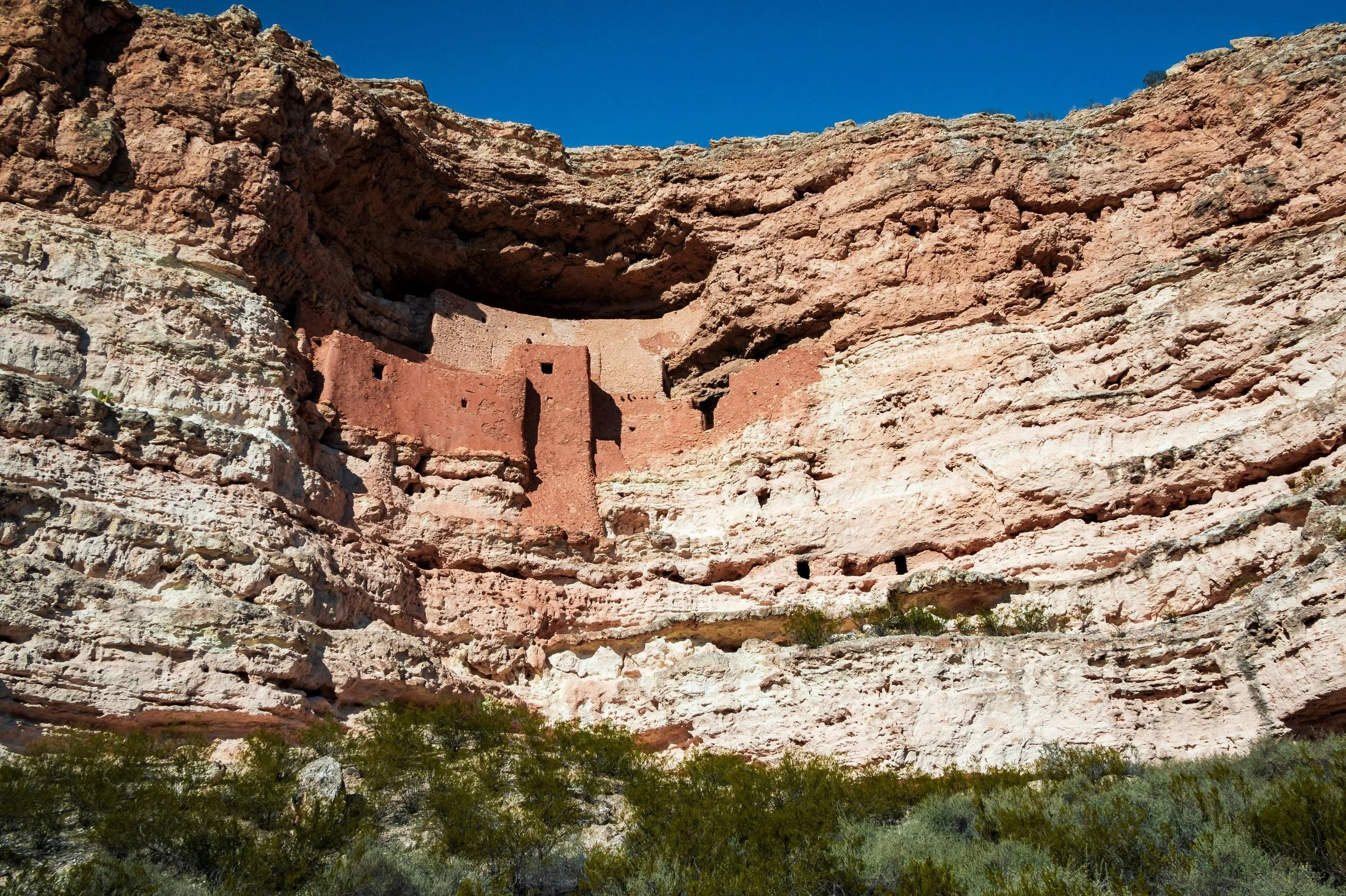
Cliff dwellings were built high in the rock cliffs for protection from severe weather and from unwanted intruders whether animal or people. The downside - it's a heck of a climb, up and down, to fetch water and gather or hunt for food. And, it must have been quite the exercise in strength & willpower to haul up any big game. If I was the chief's wife - I would have had a secret stone stairway built…. just saying!
Around 1425 AD, the Sinagua pretty much disappeared from the area. Some say they migrated to other areas, or joined other tribes in Arizona, like the Yavapai, Apache, Hopi, or Zuni.
Montezuma's Well
Location = Montezuma’s Well. 5512 County Rd 77, Rimrock, AZ. Montezuma's Well is a huge sinkhole and natural spring. The historic Back Ranch house is also here. Mr. Back bought the land in 1889. The Well receives about 13 inches of rainwater/year. In addition to rainwater - every day, 1.5 million gallons of underground water pushes it's way up to the surface.
Be warned though - the water in Montezuma's Well is toxic. It's loaded with arsenic and carbon dioxide - the fish can't even survive. However, there's 5 different organisms that supposedly only live in Montezuma’s Well and somehow survive - including a water scorpion & leeches. Uh.... super GROSS.
Remnants of the earliest Sinagua homes called pit houses can be seen partially underground near the Well.
Bell Rock & Courthouse Butte
Hiking in red rock country, you’ll experience a gorgeous color palette - miles of green trees sprinkled around towering red rock formations, covered by blue skies. Despite it being a popular trail - it was both a beautiful and serene journey. We chose the Midway trailhead off Courthouse Vista Parking.

Bell Rock
Location = Bell Rock. No address to Bell Rock, Sedona. Take Forest Service Rd off Hwy 179 to Courthouse Vista parking. FYI: See Parking Fee info above, under “Sedona”. Mountain bikes also use this crowded trail, so maybe arrive early or go after 2 pm. Carry EXTRA water as shade is almost non-existent.
The Bell Rock & Courthouse Butte Loop trail is 3.8 miles to view these iconic formations. From the parking lot, follow the sign to Bell Rock Path. At the “T” intersection, stop and take a mental image so you don't miss the Access trail back to your car.
From here you could go straight and climb Bell Rock. After reading some reviews - I opted out due to my fear of heights going down steep inclines. I prefer climbing UP.... and seriously, isn’t there a tram down???
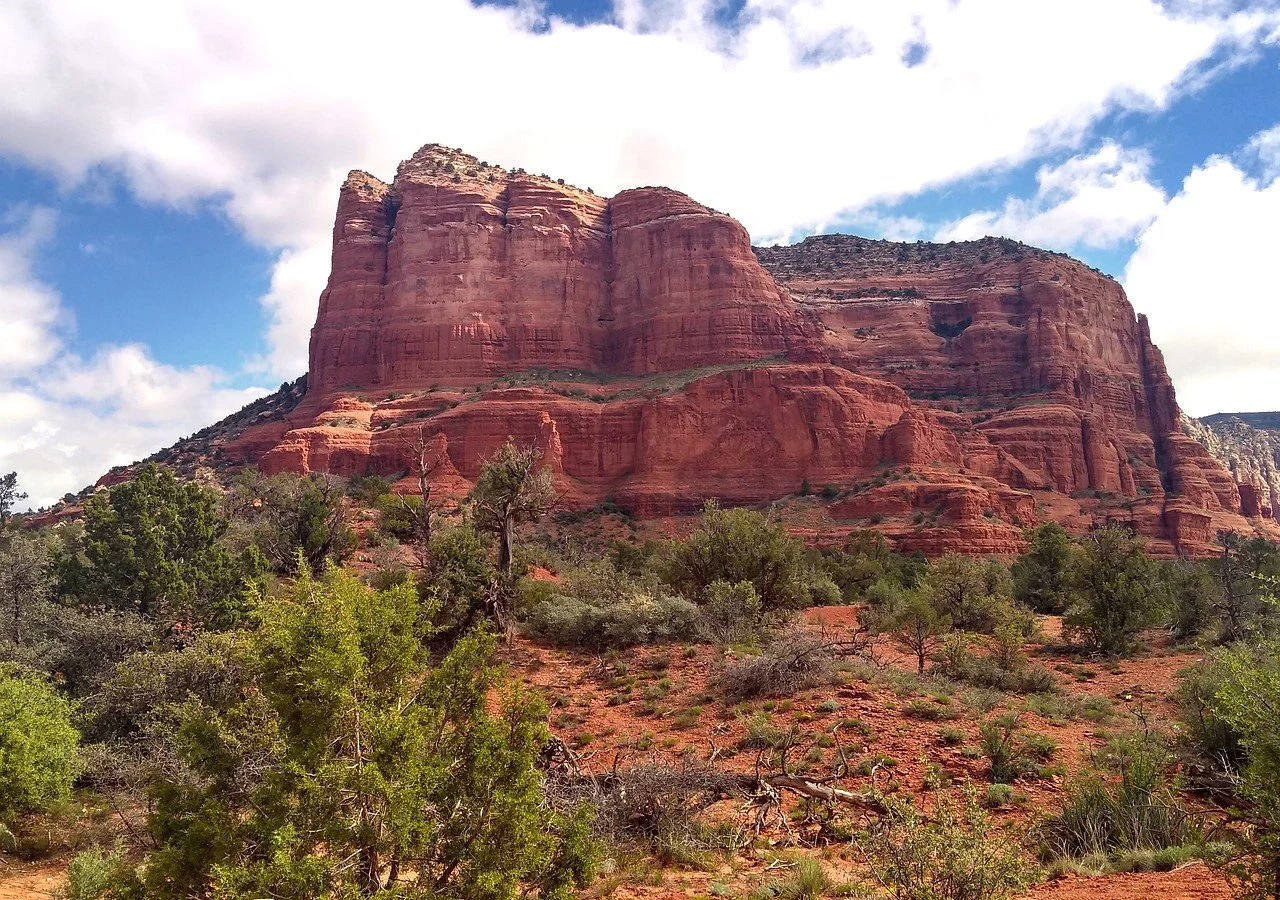
Courthouse Butte
Go left on Bell Rock Trail and start a clockwise loop to the right - always taking the trail closest to the ginormous Courthouse Butte on your right.
In a short distance, Bell Rock Trail turns into Llama Trail until it splits. Stay right on Courthouse Butte Loop. Continue around to the right which brings you to the backside of Courthouse Butte.
Next you’ll cross a narrow “wash” bed which will probably be flowing if you go during winter or spring. Once across, find Courthouse Butte Loop to the right. A short distance ahead, the trail splits - you know the drill…. stay right. Now you’re directly behind Courthouse Butte and you can see Bell Rock up ahead.
Don’t take the Rector Connector Trail to the right - stay on Courthouse Butte Loop. When you reach the 4-way intersection, go right onto Bell Rock Trail. This is where the trail brings you super close to the base of Bell Rock. This wide trail meanders to the right & left until you reach a fork. To the left is Phone Trail which leads back to the parking lot. To the right is Bell Rock Trail which takes you to Access Trail (on the left) and back to parking.
Chapel of the Holy Cross
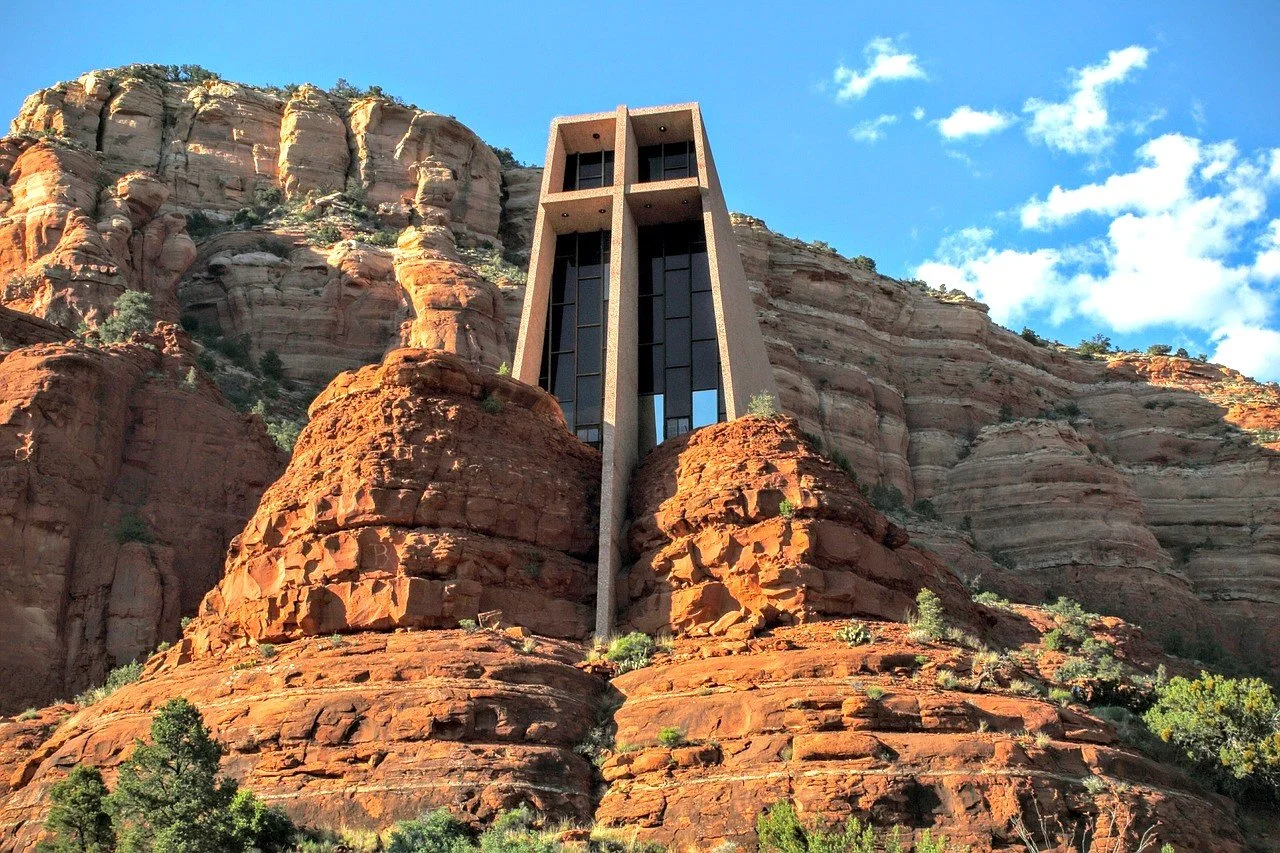
Location = Holy Cross Chapel. 780 Chapel Rd, Sedona. Open 9-5, Mon-Sun. Restrooms are down the hill. The site attracts crowds and parking is limited, so you may need to go earlier or later in the day during peak seasons. Chapel of the Holy Cross is a Roman Catholic church which still holds services. The cross is absolutely the central focus and so much more stunning on the inside.
Chapel of the Holy Cross
Marguerite, a Sedona local, commissioned the Chapel to be built.
Her first attempt was in Budapest, Hungary with Lloyd Wright, the son of famous architect Frank Lloyd Wright.
The project failed due to the start of World War II.
Refusing to give up, Marguerite began construction in Sedona. Finally in 1956 she saw her vision completed for a total of $300,000. The stained glass window in the front is literally held together by Christ on the giant 90 foot high cross which is best viewed from inside.
The Chapel of the Holy Cross is a gorgeous beacon at night. The Sedona desert night sky reminds me of a dark, thick blanket covered in twinkly lights and draped below the heavens. Magical.
Cathedral Rock
Location = Cathedral Rock. 500 Back O Beyond Rd, Sedona.
Cathedral Rock is about 1.4 miles roundtrip if you climb to the top. However, further research revealed that half of that is a steep & strenuous incline, so I the wheels started to turn.... the decline would be steep…. and very perilous. I could end up sliding to my death - sorry, I can’t help it - that’s where my mind goes. With that paralyzing image, I had to pass. If I had a rope to hold onto, I could go down backwards without my fear of heights kickin’ in.
If you hike to the top, I’d love it if you could share a couple photos with me. Pretty please?

Cathedral Rock is really crowded during peak season, likely due to the thrill of the climb, the unbelievable views, and the vortex. A friend of mine loves to climb for the sunset views. Just remember - if you get stuck out here at night, it's a total blackout so don't get lost. I've climbed plenty of mountains and prefer the uphill route, especially since my knee get’s pretty angry at me on any of the longer downhill hikes.
There's 6 trails around the Cathedral Rock area, and even if you don’t get photos from a bird's eye view - ground level pictures are still spectacular. After parking, take Cathedral Rock trail. At the intersection go left on Templeton trail. The best ground photos are within the first 1.5 miles or so, making it a 3 mile roundtrip.
FYI: Climbers: get hiking boots for traction & some safety gear: rope, flashlight, whistle, fully charged phone, thermal blanket for cold/wind/rain (under 1 pound), trail snacks & extra water. Use a backpack with front strap around the waist to secure it while climbing. Not trying to be your mom, but better safe than sorry especially if you’re chasing sunset views.
Palati Heritage Site
Location = Palatki Heritage Site. 10290 N. 795, Sedona. From Hwy 89a, go 7.8 miles on Forest Rd 525 to parking.
FYI: requires a $5/day Sedona Red Rock vehicle pass - purchase online. Reserve your 1 hour guided tour online only. Forest Rd is not paved & bumpy - cars low to the ground will have trouble. NO pets allowed - not even in cars. The 60 steps to the site are moderate.
Palatki Heritage Site was first documented by the Smithsonian Institute in 1895. They called it Palatki, and it's sister site Honanki. Palatki means "red house" In the Hopi Indian language. The trails to the Palatki cliff dwellings are both 1/2 mile roundtrip.
You'll see almost 900 year old petroglyphs, a type of rock art, and pictographs, a symbol for a word or phrase. These Sinagua cliff dwellings were built around 1125 AD and were occupied until around 1300 AD. The dwelling available to view has 5 rooms on the bottom floor with 3 more upstairs.
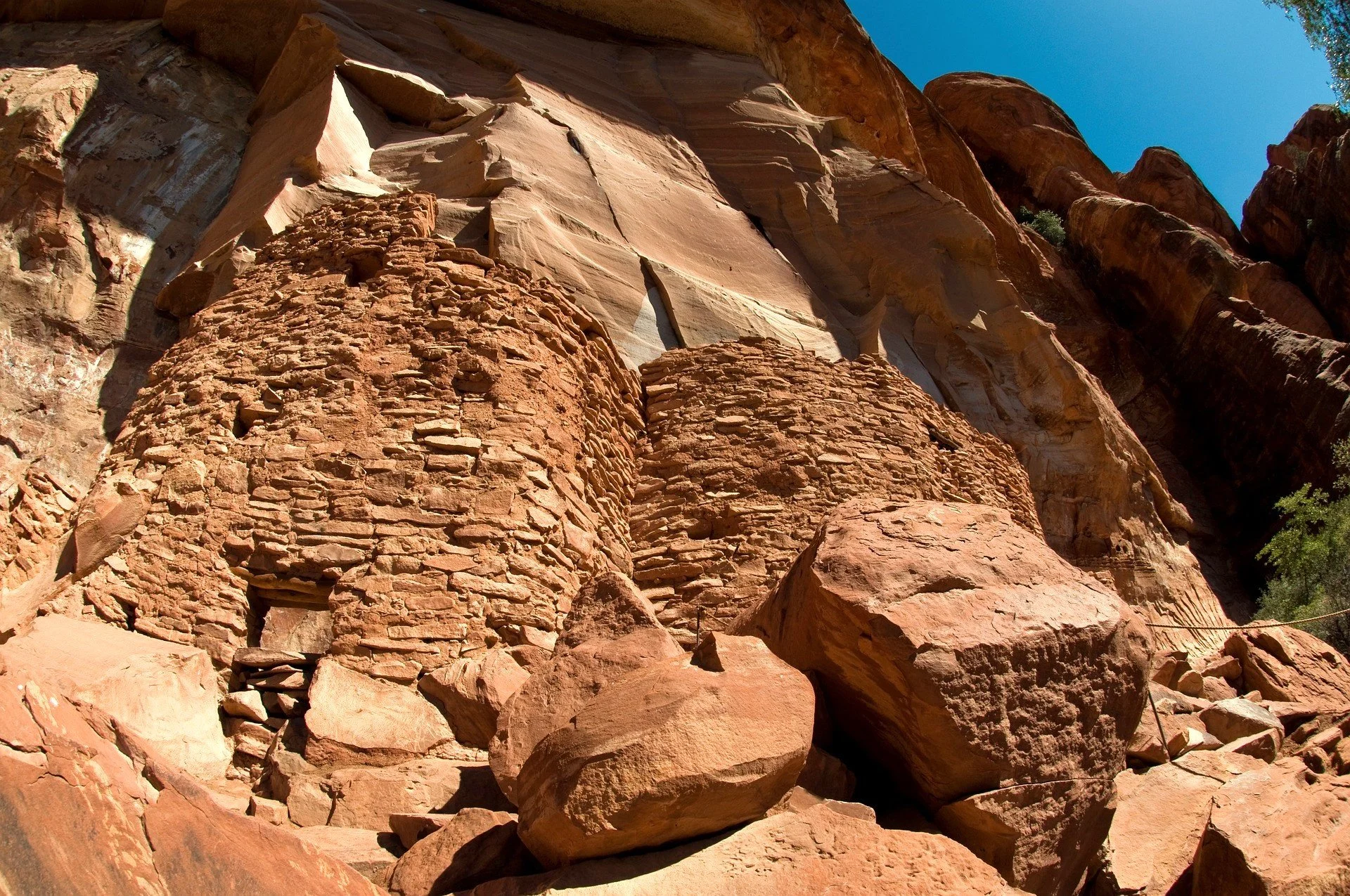
Palatki Heritage Site
The trail to the petroglyphs is an easy climb along the cliff, and up the stone steps to a cliff overhang.
You'll learn some interesting facts: like the drawings were originally painted in white, but soot from the fire caused the animal fat that's used to make the paint to change color. Animal fat? How long did it take to figure that one out?
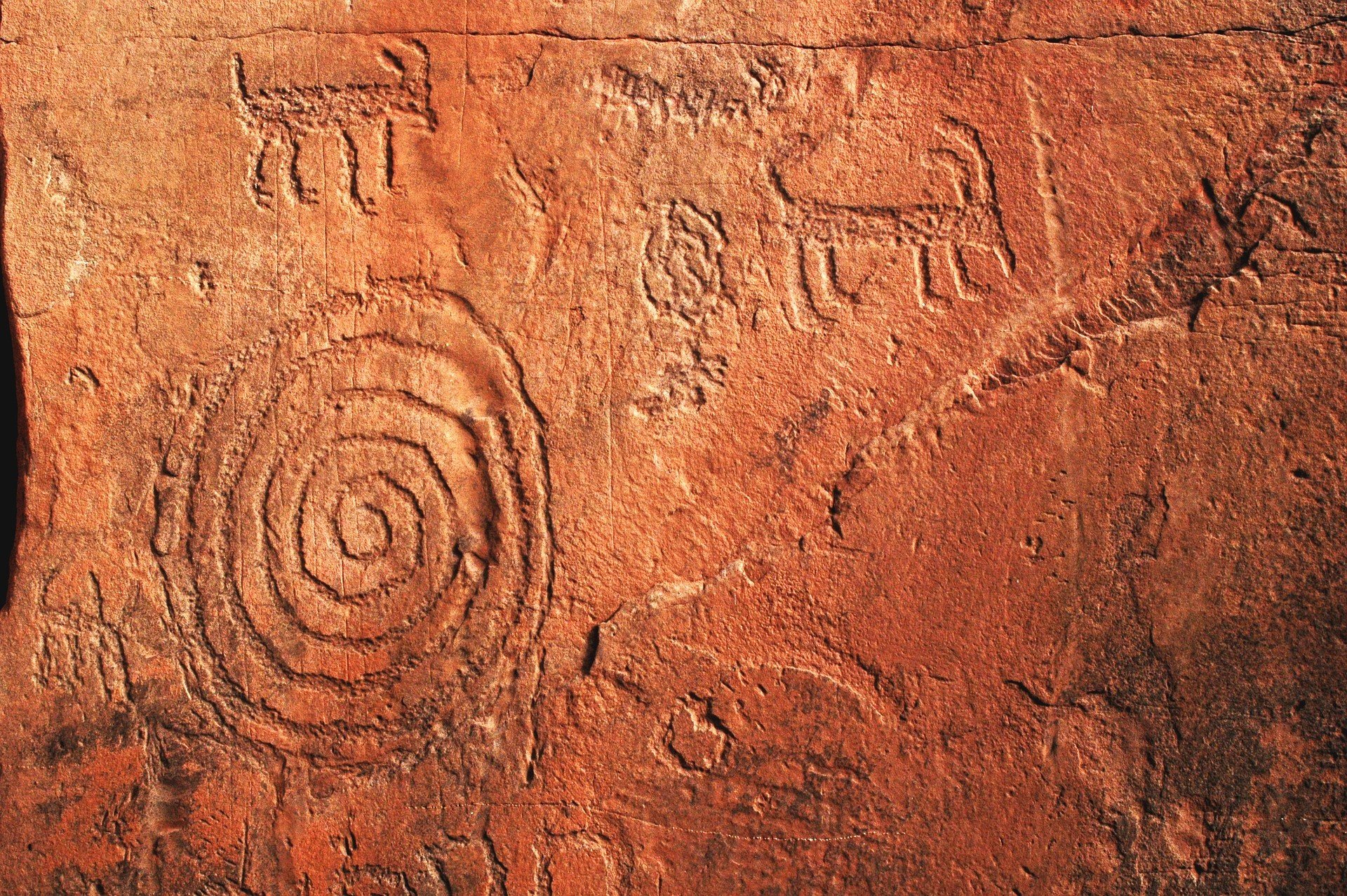
Palatki’s Petroglyphs
The cave walls are covered in cave drawings & symbols which must have taken forever to create. No one knows exactly why the Sinagua disappeared - environment, conflict, overpopulation, or another reason.
Also in the area - you can find grinding stones, discarded corn cobs which I can't believe didn’t deteriorate, and pottery shards. It's astonishing to think you're looking at 800-900 year old stuff made with a rock tool. So cool.
Slide Rock State Park
Location = Slide Rock Park. 6871 N. Highway 89A, Sedona. Fees: $10 to $30 per vehicle depending on the date. Hours vary during the year and it's crowded in peak seasons. The Park has a gift shop & small store.
FYI: Slide Rock Park is first come, first served to control crowds. NO pets allowed - not even in vehicles. No glass and they do check coolers. Beware of Javelinas - small boars able to inflict serious, crippling bites, and usually hang around the main picnic area near the parking lot.
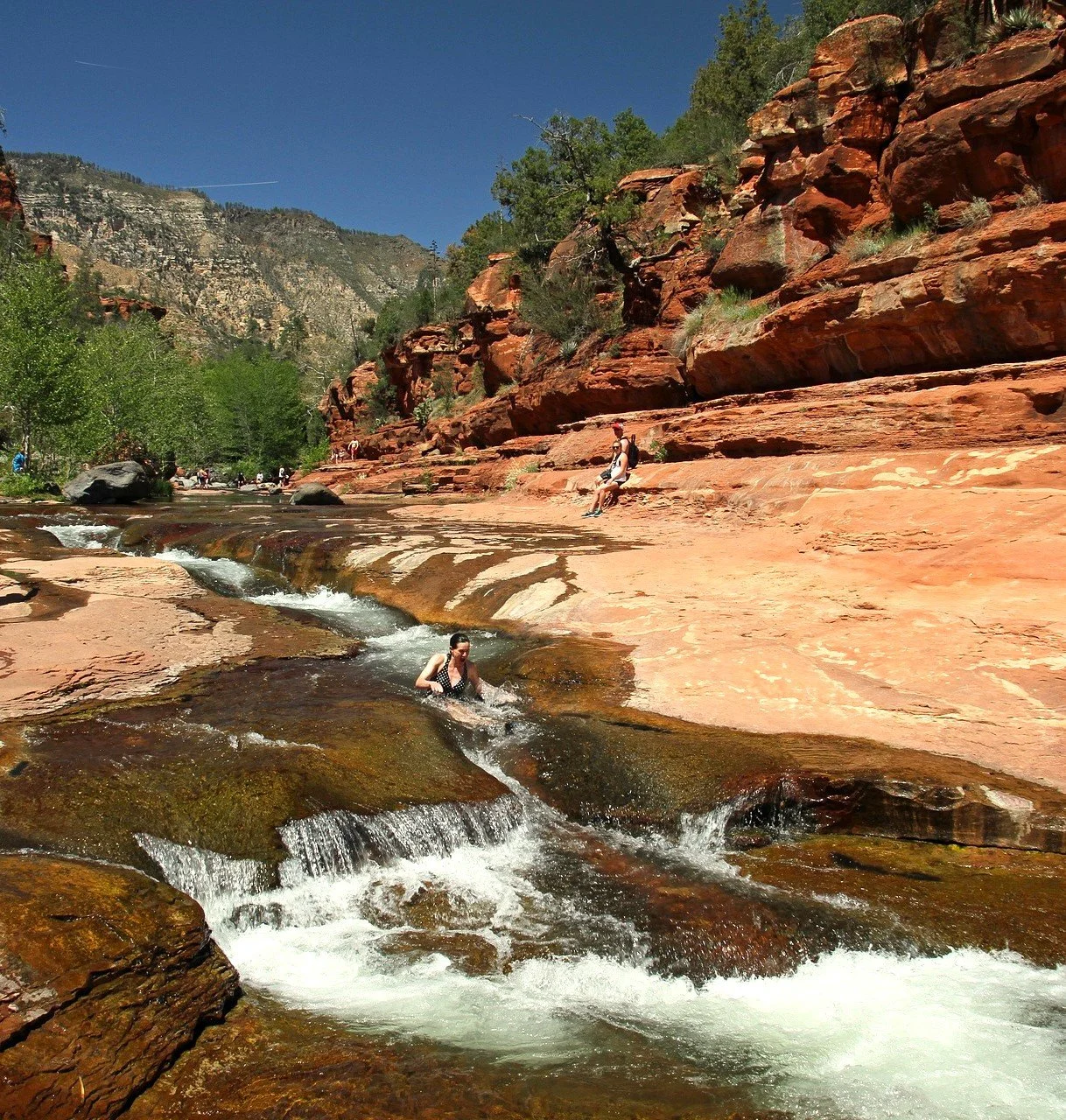
Slide Rock State Park
Slide Rock is 2.5 to 4 feet wide, and 80 feet long per the Park. The swimming area is 1/2 mile long in Oak Creek.
We saw a few people using a tube and it looked like a super fun ride as well.
Woo-hoo your way thru the slip-and-slide ride as many times as you want. Then relax, dry out, and warm your bones on the fairly flat rock ledges.
Ready for a repeat? Round 2 of the rock waterslide is up next.... and then lunch.
FYI: The creek bed & rocks underwater are covered in algae making them really slippery and I've heard of many injuries. To protect my feet - I always wear river shoes, and they also help a bit with traction.
Slide Rock Park originally began when Mr. Pendley bought the land in 1910 and successfully created an irrigation system that's still used today. That allowed him to plant his apple orchard which is still producing today. Once the canyon road was built in 1914 and news of the main roadway would be paved - he constructed cabins to host tourists. If you love history - check out the old homestead & cabins. If you want to pick apples - ask the Park and go to their Apple Festival in October.
More Fun Things to Do
Best times to visit are March to mid-Jun and Sept to mid-Dec.
Devil's Bridge - photo up top. This is a famous & popular spot for the incredible views & photos. The last scramble to the top is definitely steep and you have to maneuver over rocks. Or, take the dirt road (for 4x4 vehicles) and the final ascent is mostly stair climbing. But you won't ever catch me walking across the bridge.
Swimming - Oak Creek provides many swim holes & beaches. Besides Slide Rock Park above, Grasshopper Point is gorgeous with deep pools and red rock cliffs you can dive off. Crescent Moon Picnic Area has several swimming holes along the less than 1 mile trail. For an awesome view of Cathedral Rock, Red Rock Crossing is good for a shallow swim & beach hangout.
Trails - Airport Mesa aka Table Top Mountain. There are several trails near the airport, but the most popular are: Airport Loop trail (3.3 miles) and Airport Mesa spur (1 mile roundtrip). The panoramic views are breathtaking.
Tlaquepaque Shopping Village - an outdoor shopping center designed as a typical Mexican village. If offers art galleries & glassware, restaurants, and other shops. And the cobblestone streets & water fountains crafted in mosaic add a romantic & charming vibe to the whole experience. Pronounced T-la-keh-pah-keh.
Night Sky Tour - Both Sedona & Flagstaff are considered “dark sky" cities - so look to the heavens & be dazzled by the wonders of the night galaxy.
Travel Tips - Sedona
Average temps high/low = Sedona is 4,360 feet elevation. Summer: 96/65 degrees F. Winter: 59/32. The hottest temperature was 113 degrees F. in 2016.
Weather - expect 1-10 inches of snow/year from December thru February. Expect monsoons from July & August with short periods of thunderstorms & heavy rains which causes flooding. Hikers & swimmers use caution.
Backpack essentials - EXTRA water, cell phone, bug spray, bear spray & bear horn, tube whistle is louder, flashlight, flares, pocket knife, rope, sunscreen, rain jacket.
Winter Essentials - thermal blanket, waterproof boots, warm clothing.
Hiking conditions - trails don't have much shade, so drink water before, during, and after hiking in the desert. Trails also can be unstable due to sliding rocks, gravel and steep terrain.
Vehicle safety – Keep a spare blanket, boots, jacket, gloves, flashlight, lighte
Vehicle safety – Keep a spare blanket, boots, jacket, gloves, flashlight, lighter, water, and snacks in the car. Winter roads can be icy under the snow. Beware of black ice - a layer of ice over the road that's difficult to see. Use “winter” tires or all weather tires in lighter snow. If you only have "all season" tires - take snow chains.
Rivers/lakes – wear river shoes to avoid cuts on the feet, and to help with traction.
Poisonous plants - every region has it's own list of poisonous plants, so please know what you're touching.
Wild animals - black bears are becoming bolder in parks/campsite areas mostly due to food. Bears are more aggressive in April after hibernating and mam's with her cubs. Air horns - use it every few miles, it's best to alert them rather than startle them. If a bear charges - do not run, slowly back away facing the bear, use the air horn & wave your arms. Use bear spray if they get close.
Also dangerous are Gila monsters, mountain lions, javelinas, desert toads, Africanized bees, centipede, blister beetle, and tarantula hawk which is a wasp.
Poisonous creatures - Arizona has 13 venomous rattlesnakes and the coral snake which has venom like the cobra. Also poisonous are: scorpions, black widow & brown recluse spiders.
Trash - Pack out what you pack in.
Wilderness safety - because there are remote areas with less visitors, it's best to travel with a buddy. Also, give a friend back home your itinerary.
Wilderness resources - for current info & alerts on federal land, check = Wilderness Connect, which includes info from all 4 national agencies: Forest Service, Parks, Fish & Wildlife, and BLM. State = google state website with current wilderness info. Local = google "ranger stations near ___".