Anchorage AK: Mt. Denali and Walk on a Glacier
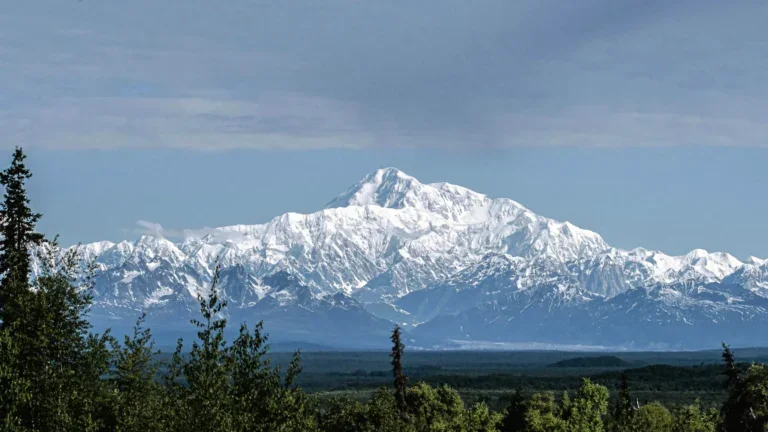
Mt. Denali, a.k.a. Mt. McKinley
Anchorage, Alaska is pure wild offering unique & extreme experiences. Explore the vastness and majestic peaks in Denali National Park, walk on Matanuska Glacier & take a boat to Portage Glacier. Also, get an up close experience with wildlife giants like whales, bison, bears, and moose. A bucket list must.
Table of Contents
Approximate Time: 8-14 days total for Fairbanks & Anchorage, AK
Experience the Unique & Extreme - fun facts
Anchorage area
Matanuska Glacier
Portage Glacier
Gray Whales
More Fun Things to Do - Fairbanks & Anchorage
Travel Tips - Anchorage
Great add-on trip: Fairbanks, Alaska.
Alaska
Alaska means "Great Land" in the Aleut Indian language.
It has the 11 tallest mountains in the USA. Denali is the highest at 20,310 feet. California's Mount Whitney comes in 12th at 14,494 feet. From Denali's base - it's peak is 1 mile higher than Everest.
Wildlife giants live in these harsh conditions: bison, moose, and caribou. Alaska also has the largest bears & whales in the world.
It's 663, 267 square miles of wild. Alaska is still bigger than a grouping of 22 states.
The coastline is 33,000 miles long which is 50% longer than the coastline around the lower 48 states.
There are over 3 million lakes & many aren't named, so it's an estimate. Wisconsin is next with 15,291.
In 1867, Russia sold Alaska to the USA for $7.2 million. Russian culture is still evident in several small villages south of Anchorage.
Lowest recorded temperature = -80 degrees F. (that's below 0). If you lived in 80 degree weather, that's a 160 degree difference. STUPID COLD. Having lived in Fairbanks for 18 years - the coldest I got to enjoy (NOT) was -64 degrees F.
Denali (aka McKinley) National Park
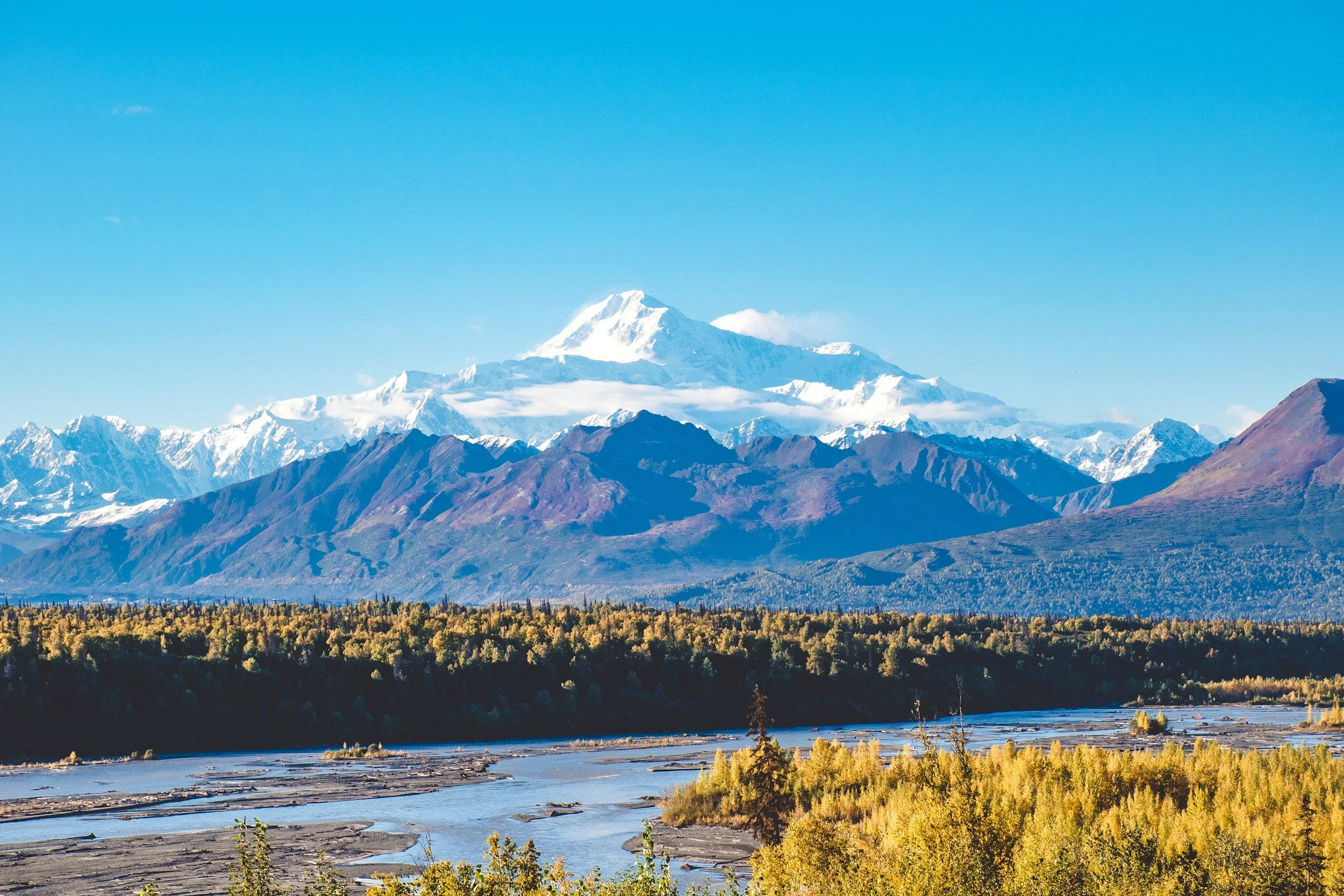
Denali National Park
Denali Park is over 6 million acres of wilderness. It's pristine, raw, and can be dangerous mostly due to the wildlife giants that call this environment home - like moose, caribou & grizzly bear.
You'd think with all that wilderness to roam in, they'd stay in their own backyard. Nope, moose are frequently seen around the outskirts of town & in people's yards.
The original name given by the Alaskan Athabascan natives over 1,000 years ago was Denali - meaning "great one" or "high one". In 1896, a gold prospector came to Alaska and named it after President McKinley.
In 1975, Alaska asked to have it officially named Denali, but at that time the federal government refused. In 2015, the federal decision was reversed and all documents were changed back to it's native name, Denali. They finally did Alaska right.... until I found out about the government’s 2025 decision to change it back to McKinley — again. My opinion: Alaska should have the right to keep it's original name Denali.
Mt. Denali is a majestic peak at 20,310 feet, and it's so big you can see it 150 miles away. Here's a surprising fact: measured from it's base, Denali is 1 mile taller than Mt. Everest, even though Everest is the tallest peak. WOW. Denali is also impressive all year round because the snowy peaks never melt.
From the Parks Hwy turnoff into Denali National Park and you'll find Denali, the highest peak to the southwest. If you love "extreme" adventures - may I suggest a serious skiing trip. Or, maybe train for 2 years to climb that bad boy. No thanks.... not my kind of circus!
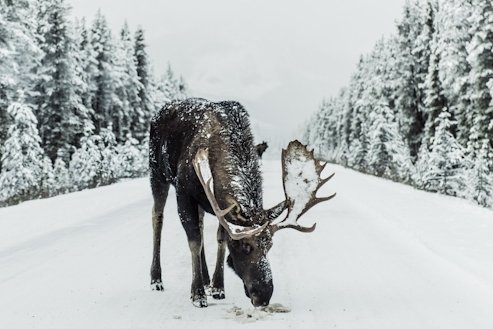
Moose on the Loose
On a few occasions, we were visited by a stray male that wandered into our back yard. That's like over 1,500 pounds of up close and SCARY.
And our 90 pound Malemute dog wasn’t too happy about the monstrous intruder either. Our beast of dog, with 5 alarm barking and ferocious fangs got the moose to leave, likely to find quieter pasture.
There's 2 types of moose encounters that you want to avoid. If you’re un-lucky enough to hit a moose on the road, chances are your car will be totaled. The other moose encounter is during rutting season when the males are looking for the ladies. During the rut they get extra cranky and aggressive - so stay as far away as possible. Rutting season starts later in September to early October.
Anchorage, Alaska is on the southern coast, and I loved our trips there for 3 reasons. 1. It's warmer than Fairbanks, especially in the winter. 2. They have glaciers & waterfalls which are spectacular when they're frozen & rippled in hues of blues & aquas. 3. The seafood fresh from the boats.
We brought our boat down once to Port Valdez to fish for salmon. I'm not really a fan of fishing because I don't like to sit still that long, just praying for a bite and not to be capsized! When I got the first tug on the line in less than 35 minutes - everyone was surprised. My dad & ex-husband were none too happy either - I mean, that goes against the rule that says men , or something!
Anchorage Area
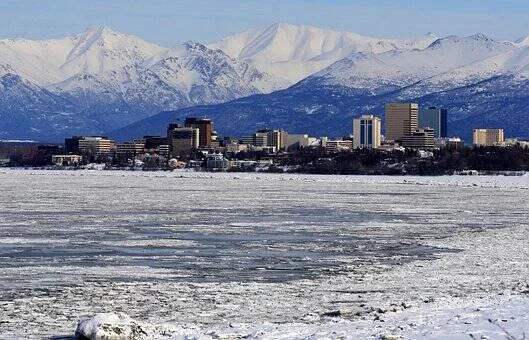
Anchorage Skyline
Anchorage is the largest city in Alaska with 287,932 as of 2023 which is about 40% of Alaska's population. Within 50 miles of town, there's about 60 glaciers that are accessible by boat, foot power, train, or dog sled.
Matanuska, Portage, Knik, and the glaciers in Prince William Sound are some of the best to visit with the easiest access.
Anchorage offers a variety of opportunities to learn about native Alaskan Eskimo history and culture, as well as the wildlife. And, just like Fairbanks - if you're an outdoor lover - this will not disappoint. On my many trips to Anchorage, I chose the activity options that were unique to Alaska and the area.
Fairbanks is located close to the middle of the state with mountains, rivers and wilderness. Anchorage of course has plenty of mountains and wilderness, but the coast is a totally different landscape. Here's a few ideas that far exceed the ordinary.
Anchorage Wildlife Conservation Center - a 1.5 mile loop you can walk or drive to see Alaskan wildlife, guided tours are offered with animal encounters. For: AWCC fees & info.
Alyeska Ski Area - 27 ski trails and 2,000 vertical feet of slope. There’s aerial trams, sky bridges, hiking, biking, and skiing.
Williams Reindeer Farm - self or guided tours with over 15 different types of animals, or take a hike with a reindeer. Located in Palmer, AK. For: Farm fees & info.
Alaskan Native Heritage Center - there's life sized Villages, live cultural performances, shop for Native art & jewelry, a museum and more. For: ANHC fees & info.
Matanuska Glacier
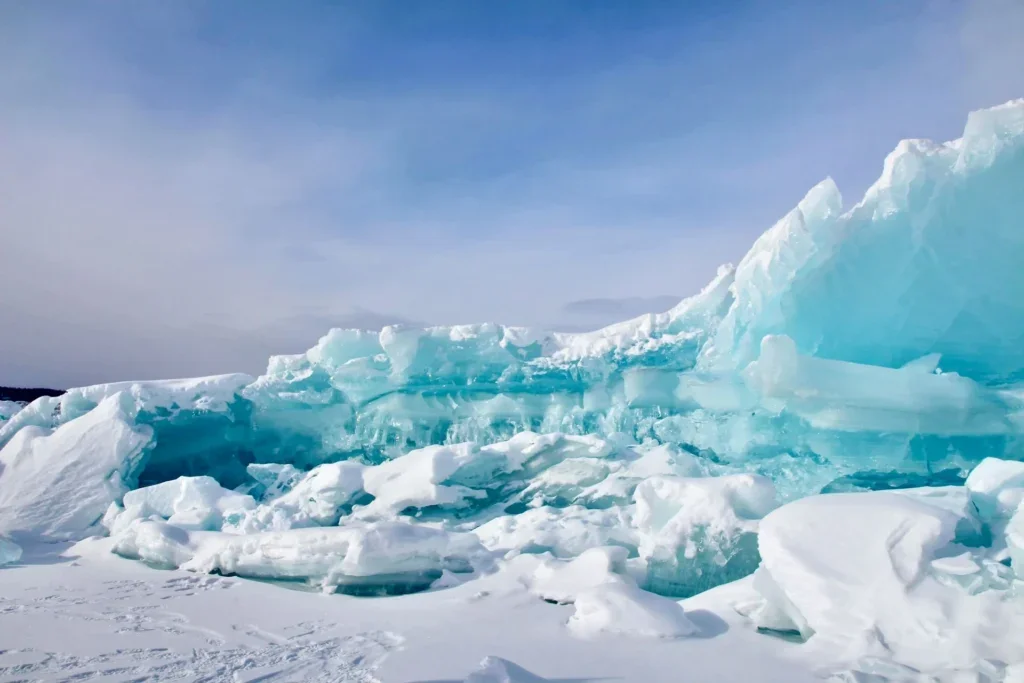
Location = Matanuska Glacier
66500 S. Glacier Park Rd, Sutton AK. Access = foot travel. Book a tour, you'll want it for safety & the learning experience. For 2 hours, go with Glacier Tours. For 3-8 hour tours, go with Nova Alaska Guides and the 6 mile Matanuska Glacier Trek.
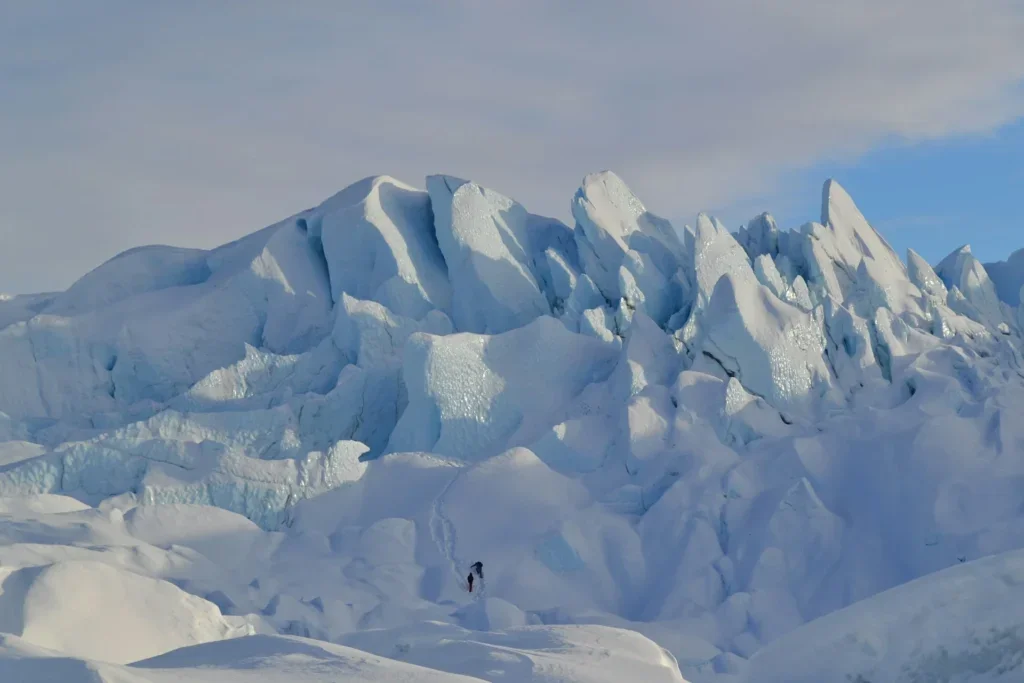
Matanuska on Foot
Matanuska gives you an up close experience as you walk on top of the glacier. If you're brave enough - walk inside it.
It's a WOW in my book. Matanuska is huge: 26 miles long and 4 miles wide. Some of the tours will take you past the Ice-Falls to explore more stunning glacier features.
What I really love about glaciers and frozen waterfalls is seeing the most dazzling colors of blue & aqua. Water appears in these stunning colors because of science: sunlight consists of all 7 rainbow colors which combine and look white to our eye. Water absorbs red & orange light the best, while the blue & violet lights travel deeper into the water. That's why oceans appear blue. The water is reflecting the blue colors back to our eye. In warmer water where there's algae present, so you see more green hues.
If you examine the ice up close, you'll find it appears like millions of tiny crystals stuck together. Matanuska Glacier is reported as one of the few glaciers in the world that you can explore on foot. FYI: To help in slippery ice/snow - get some fairly good ice cleats for your boots, $35-$65.
Wildlife Giants
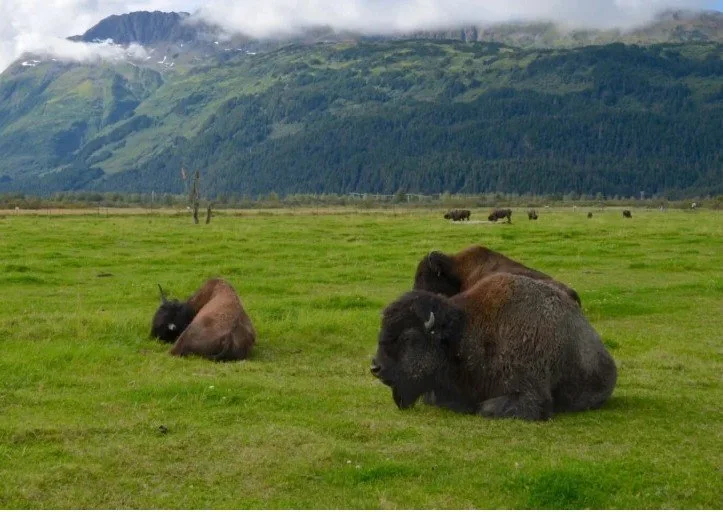
Giant Wood Bison
Wildlife giants are everywhere in Alaska, both on land and sea. There's a variety of tours available to get a closer look at these beasts in the wild.
My only recommendation is to stay in the middle of the tour group.... for safety. Everybody on the outside will get eaten first! I’m kidding. And, don’t be the slowest one!!
Wildlife Giants on Land
1. Wood Bison - the males usually weigh over 2,000 pounds and stand about 6 feet tall at the shoulder. You can visit these giants at the AWCC, AK Wildlife Conservation Center.
2. Polar Bears - a male standing on it's hind legs can be 11 feet tall, and weigh more than 1,700 pounds. The largest recorded in Kotzebue, AK was almost 12 feet tall and just over 2200 pounds. Polar bears are the largest bear in the world.
3. Kodiak Bears - Kodiak's are brown bears and the males have been recorded at over 1,600 pounds. Kodiak bears are the 2nd largest bear in the world.
4. Alaska Moose - these males easily get to 1,600 pounds and almost 6 feet tall. The Alaskan moose is the largest moose in the world.
5. Other large land animals: Roosevelt Elk, Grizzly Bear, Caribou, Dall Sheep, and Gray Wolves.
Gray Whales
The longest recorded mammal migration was a gray whale that traveled 13,988 miles. Typically they swim about 12,000 miles/year. Due to dwindling populations, they're mostly in the North Pacific region within 2.5 miles from shore.
Gray whales migrate from the Chukchi & Bering seas between Russia & Alaska down to Baja California, Mexico. There they mate and return the following year to calf. They feed off the coasts of Alaska & Russia, eating roughly 2,400 pounds of crustaceans per day. That's some appetite.
Gray whales are also very smart and one of the friendliest whales. Photo right: It happened so fast, I'm not sure whale species this is.
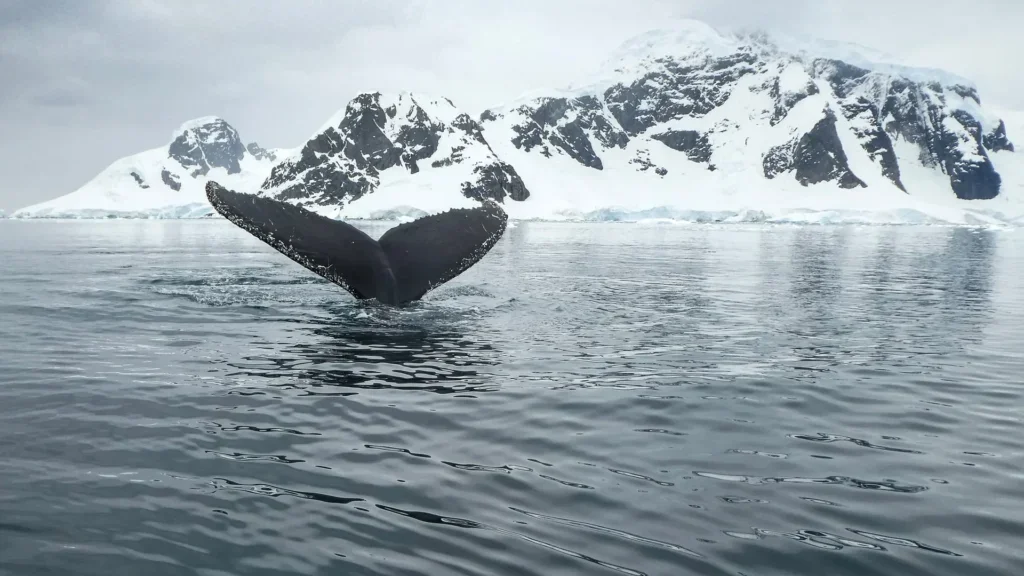
Wildlife Giants in the Ocean
1. Blue Whale - can weigh 200 tons (400,000 pounds) and be up to 100 feet long. Blue whales are the largest whale in the world, and the largest animal ever known to have lived. They can be seen in Alaskan waters during the summer.
2. Fin Whale - range in size from 50 to 70 tons (100,000 to 140,000 pounds). The Fin whale is the 2nd largest in the world.
3. The most common whales found in the Gulf of Alaska are Humpback Whales (40 tons) who are known for breaching the surface. Gray Whales (30-40 tons), see the incredible migration journey just up above. And, Killer Whales a.k.a. Orcas (6-11 tons).
Visitor Center at Portage Lake
Begich, Boggs Visitor Center
Location = Begich, Boggs Visitor Center. Mile 5.5 Portage Glacier Rd, Girdwood AK. $5 entry fee, open daily from Memorial Day to Labor Day. It's run by the Forest Service, and their very knowledgeable.
Begich Boggs has living ice worms in case you're curious. More fun is touching an iceberg chunk they brought in from the lake, and walking thru the ice cave simulation. They also have photos of the original Portage Village that was destroyed in the 1964 earthquake. It's still the 2nd largest earthquake recorded in the world and the largest in the USA. It was felt by every state except 3 on the east coast. The epicenter was next door to Portage Glacier in Prince William Sound.
Up for a hike to see some amazing blue-blue water? At the end of the Moose Flats Day Use Area is the Trail of Blue Ice that travels along pathways & boardwalks and over bridges. It's 5 miles each way with plenty of viewing opportunities for salmon and other wildlife, and some gorgeous scenery of other glaciers. FYI: It's a popular trail and their website talks of black bear encounters. Travel with a group, don't carry food, and make noise so you don't startle the them.
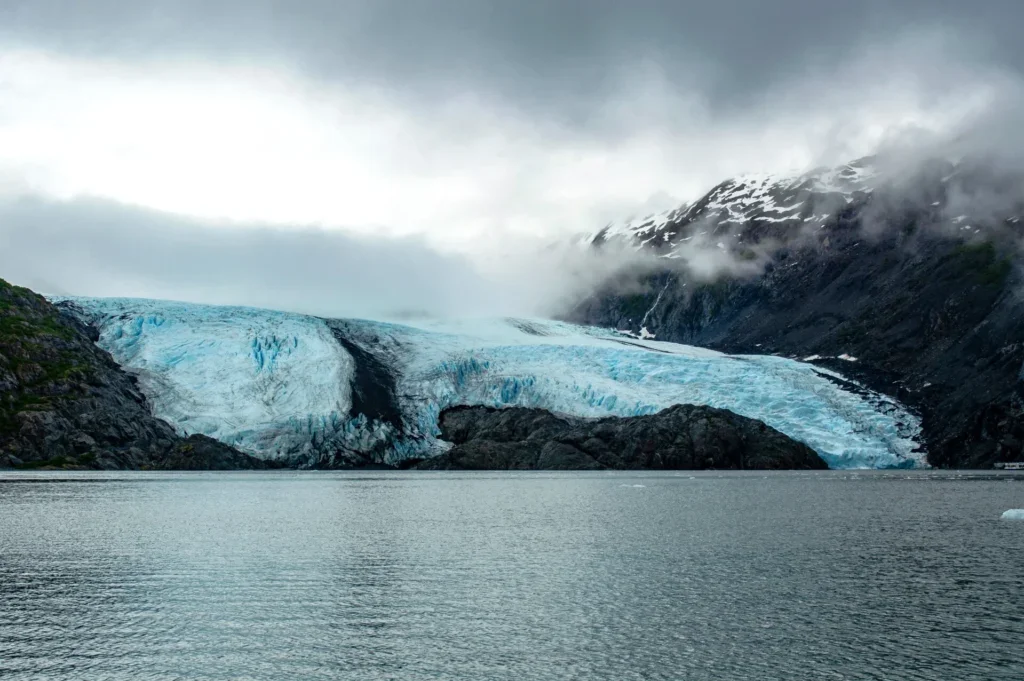
Portage Glacier, AK
Boat to Portage Glacier
Location = Portage Glacier. 1500 Byron Glacier Rd, Girdwood AK. Access = boat only. MV Ptarmigan is the only tour boat operating from late May to early September.
Portage Glacier is the 2nd most visited site in Alaska after Denali National Park. Interesting fact I learned - and a little bit gross. OK, not that gross.... but hey, I'm a girl. I figured these would have been scary-movie kind of alien creature, but, ice worms are for real. They feed on algae & stuff that actually grows in the ice. Who woulda thought? Interesting tidbit - their kryptonite is temperature. Ice worms actually melt and die if the ice water gets above 40 degrees F.
When you're on the water - listen for a loud cracking sound and get your camera ready. The ice is "calving". That means part of the glacier will break off, plunging into the frigid waters. Careful though, some of these iceberg calves are so big they create some pretty massive waves. Look at that mesmerizing blue below.
More Fun Things to Do - Fairbanks to Anchorage
Riverboat Cruise - on the Chena River in Fairbanks.
Salmon Fishing in Valdez - super fresh & delish. Commercial fishing: halibut 6-8 feet long & enormous King Crab legs.
Scenic Hwy & Wildlife Viewing - from Anchorage go south on Seward Hwy. Stop at Beluga Point turnout to view beluga whales & Dall sheep along the mountain. We didn't spot any sheep, but the whales were magnificent.
Scenic Loop - see just below the next photo.
Whitewater Rafting - Class 4 in Healy & Denali. Class 5 at 6 Mile Creek - Yikes. To calm it down a bit, but still have an exhilarating ride, try the Nenana. That's the one I've been on - it's an adrenaline pump, but not enough to give you a heart attack! The Nenana is a super fun Class 3-4..... but, DANG it's some chilly-brrrrr water.
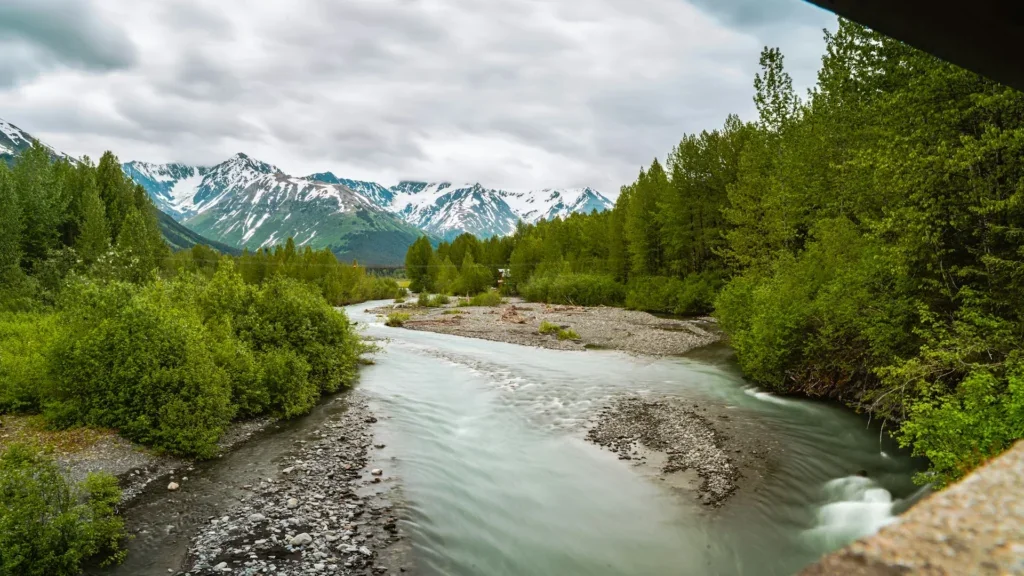
Hiking Trails
Trails are everywhere. Once, I came across a bear while hiking thru the woods with our canoe. SCARY stuff. See info about Wildlife in the next section, Travel Tips.
Scenic Loop: Seward and Homer Spit, AK
If you take the loop around the Kenai Peninsula, just southeast of Anchorage - drive past Moose Pass and Bear Creek to the port of Seward. Load your car onto the ferry and head out onto the AK Marine Highway around the southern tip of the Kenai Peninsula to Homer. From there, unload and continue driving past Ninilchik and Soldotna back to Anchorage.
Seward is a historical Russian fur trading post. It’s also home to an Alaskan SeaLife Center. Homer has a stretch of land called the Homer Spit with various shops & seafood restaurants. It also has the Wynn Nature Center worth the stop. Both are popular fishing spots.
The Wonders of Alaska
Must try foods: Alaskan King Crab legs and the Moose burger.
The Northern Lights in winter & the Midnight Sun in summer.
Dog sledding and the extreme Iditarod Race of 1,000 miles. The Alaskan Malamute is powerful & bigger than a Siberian Husky. Dog sledding is available year round.
The birch trees with white bark against a snowy background is a stunning portrait in black & white.
Ring of Fire volcanoes along the southwest peninsula & the thermal hot springs.
Travel Tips: Anchorage AK
The Alaskan bird should be the mosquito - they can really do some damage!
Average temps high/low = Fairbanks = July 73/52 degrees F. Jan 0/ -15 with lowest at -66.
Anchorage = July 62/55 degrees F. Jan 23/14 with lowest at -38.
Weather - southern areas like Anchorage are rainforest country and are usually receive more rainfall in August & September. Fall is short, the peak time for fall's vibrant colors is mid-September. Snowfall average is 75-79 inches/year however it's known to get well above 100 inches. The area also gets strong winds, blizzards, ice storms, flooding, wild fires, and landslides.
Backpack essentials - cell phone, extra water, bug spray, bear spray & bear horn, tube whistle is louder, flashlight, flares, pocket knife, rope, sunscreen, rain jacket.
Winter Essentials - thermal blanket, waterproof boots, dry socks, extra warm clothing.
Hiking conditions - trails can be wet & slippery even in summer. Snow covered areas can be deceiving with ice underneath. Be very cautious on mountain slopes & glaciers as there could be a crevasse under the snow.
Vehicle safety – Keep a spare blanket, boots, jacket, gloves, wool socks, flashlight, lighter, and snacks in the car. Winter roads can have be icy under the snow. Beware of black ice - a layer of ice over the road that's difficult to see. Use “winter” tires or all weather tires in lighter snow. If you only have "all season" tires - take snow chains.
Rivers/lakes – wear insulated rubber boots with traction. Even in warm summer months, the water in river/lakes will be very cold and currents can be deadly fast.
Poisonous plants - every region has it's own list of poisonous plants, so please know what you're touching.
Wild animals - Polar, black, and brown bears, moose, bison, and wolves are dangerous. Make sure all food is triple bagged & kept cold to keep the smell down. Bears are more aggressive in April after hibernating and mom's with her cubs. Air horns - use it every mile or so, it's best to alert them rather than startle them. If a bear charges - do not run, slowly back away facing the bear, don't stare, use the air horn & wave your arms. Use bear spray if they get close…. and pray.
Male moose are territorial & aggressive from late August to early October during rutting season. More people have been hurt by moose than bears. If a moose charges - run fast, get behind a heavy, solid object like a tree.
Wolves are rarely seen, but remember they travel in packs.
Trash - Pack out what you pack in.
Wilderness safety - because the Alaskan wilderness is more remote with less visitors, it's better to travel in groups of 3 or 4. Also, give a friend back home your itinerary.
Wilderness resources - for current info & alerts on federal land, check = Wilderness Connect, which includes info from all 4 national agencies: Forest Service, Parks, Fish & Wildlife, and BLM. State = google state website with current wilderness info. Local = google "ranger stations near ___".